The Day Return: Three Meetings, Two Countries, Home for Dinner
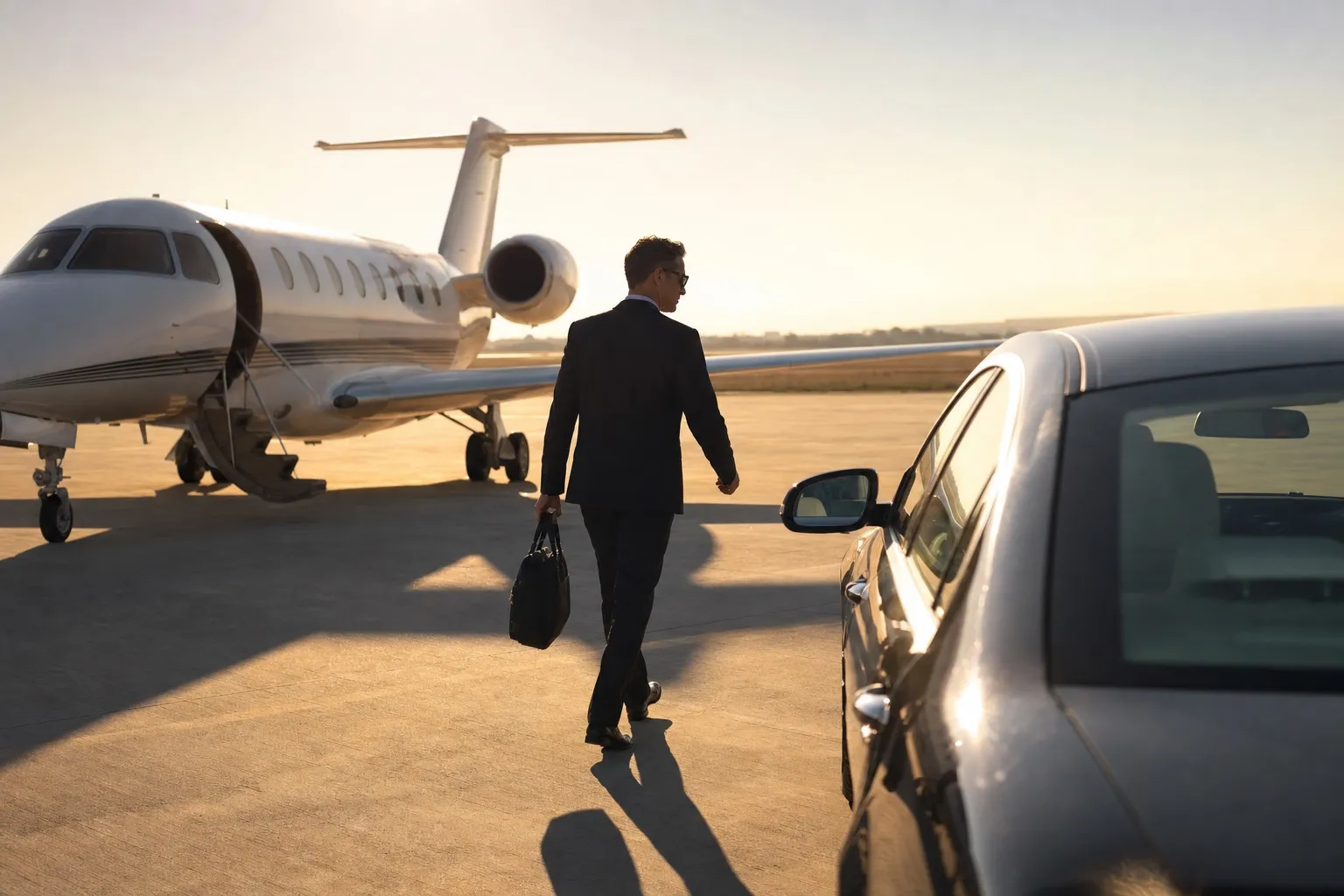
The trip that converts more sceptics than any other isn’t the villa holiday or the ski weekend. It’s a Tuesday. Wheels up from Biggin Hill at 7:30am, a factory visit outside Rotterdam at 10, lunch with a supplier in Antwerp, wheels down back in London by 6:40pm. Two countries, three meetings, and the school run the next morning like nothing happened.
Try to build that itinerary commercially and you’ll get a two-day trip with a hotel, a 5am start, and a diary that falls apart the moment the first meeting overruns.
Why the aircraft waiting matters
Here’s the detail people miss: on a day return, the aircraft and crew stay with you. That single fact changes the shape of the day.
Your 10am overruns to 11:30? The jet doesn’t leave. A useful contact says “come and see the plant, it’s 40 minutes away”? You go, because your departure time is whenever you say it is. The last meeting wraps early? You’re home an hour sooner. A commercial itinerary is a series of fixed deadlines you organise your work around. A charter is a tool that reorganises itself around the work.
There’s a hard-nosed version of this too. When two of you fly out to negotiate and the other side knows your return flight is at 5, they schedule the difficult conversation for 4:15. When your aircraft leaves whenever you like, that lever disappears.
What it actually costs
Day returns price well, for a reason that surprises people: no repositioning and no overnight. The aircraft flies out, sits on the tarmac at a quiet airfield (parking at a regional European airport is often modest), and flies home. No crew hotels, no second-day minimums, no empty positioning legs — the expensive garnish that inflates other trips just isn’t on the plate. Our cost breakdown covers those extras in detail.
Rough figures for a London day return, four passengers:
- Paris or Brussels on a Phenom 300: £9,000–£12,000
- Frankfurt, Geneva or Zurich on a light jet: £12,000–£16,000
- Milan or Madrid, light or midsize: £15,000–£20,000
Split across four salaries whose time has a number attached, against two days out of the office each plus flights and hotels, the spreadsheet gets interesting fast. It’s not cheap. It’s just much less irrational than it sounds at a dinner party.
Making the day work
A few things we’ve learned arranging hundreds of these:
Fly to the small airport, not the famous one. The meeting near Paris means Le Bourget, not Charles de Gaulle — you’ll be in the car eight minutes after the door opens. The Rotterdam factory means Rotterdam The Hague Airport, a field most airline passengers have never heard of. Access to little airports is half the product; it’s the same logic that makes a turboprop the smart pick on short sectors.
Book the car before the flight. The weak link in a day return is never the jet, it’s the taxi that isn’t there. Have the driver’s number, and give the FBO your return time even if it’s a guess — they’ll have the aircraft ready and the coffee on.
Keep the first leg boring. Depart from the airport nearest your house, not the one with the nicest lounge. At 7am the lounge doesn’t matter; the 25 minutes of sleep does.
Tell the crew your real shape of day. “We might need to add a stop in Antwerp” costs nothing to say at booking and lets the operator file the paperwork options in advance. Surprises are possible on the day, but pre-warned surprises are smoother.
The catch, because there’s always one
The day return’s weakness is weather and slot delays compressing your margin. If fog sits on the destination until 11am, a two-day commercial trip absorbs it; your one-day masterpiece doesn’t. The fix is the same one pilots use: build slack at the end of the day, not the start. Book the aircraft with a return window rather than a razor-thin turnaround, and don’t schedule anything immovable for the evening you land. What happens when weather does intervene is a topic we’ve covered separately — short version: you’ll usually still get home, just later than the plan said.
Done properly, the day return is the least glamorous and most defensible thing you can do with a private jet: it converts travel from something that consumes days into something that consumes hours. Nobody photographs it for Instagram. That’s rather the point.