Lobster, Pret, or Your Own Takeaway: How Private Jet Catering Actually Works
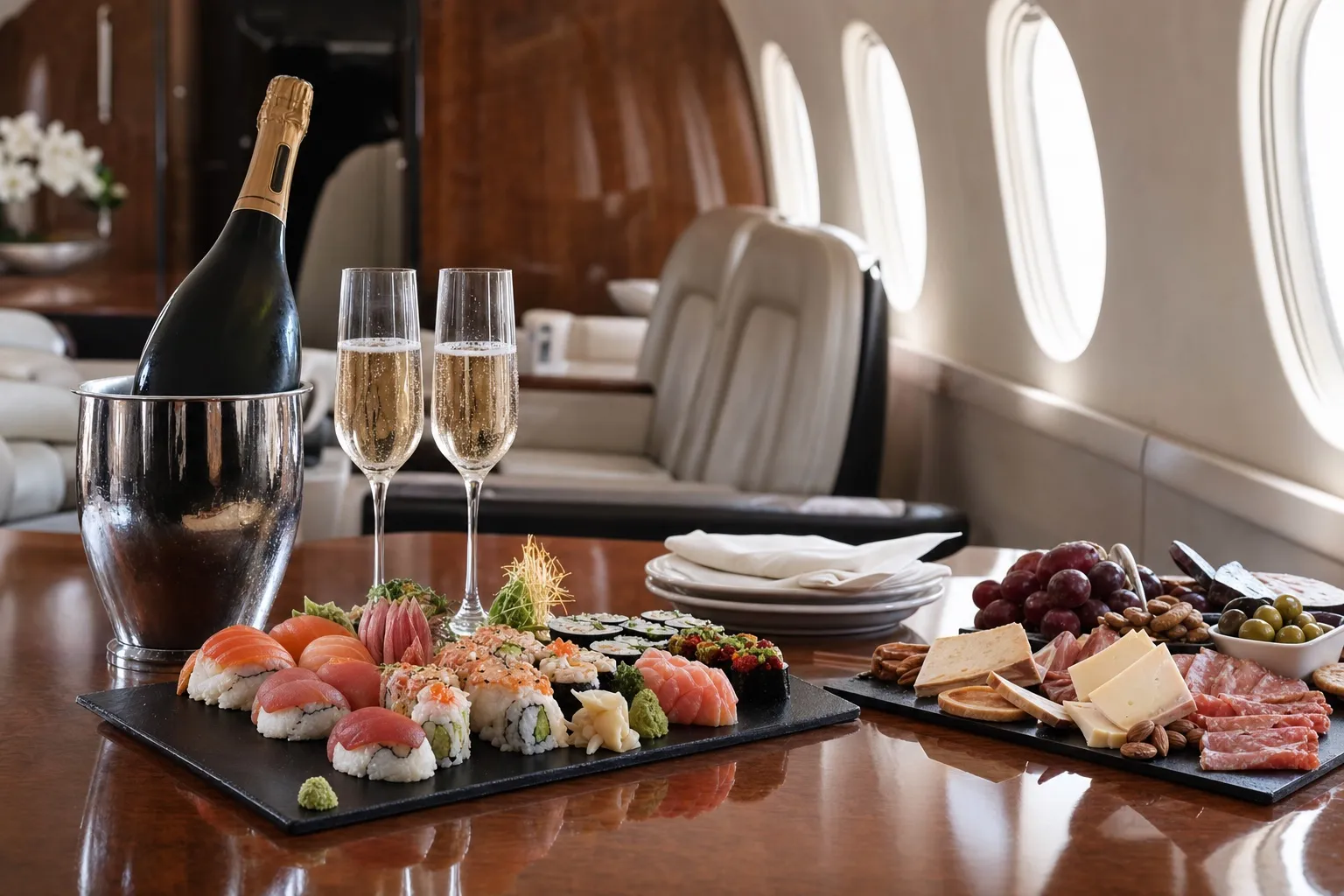
We have a client who flies Biggin Hill to Nice most Fridays in summer, and every Friday the same brown paper bag is waiting on board: fish and chips from a specific shop in Kent, collected by the FBO an hour before wheels-up. Total catering spend: about £14. It can be done, and nobody on the crew blinks.
“What’s the food like?” is one of the most-asked questions we get, and the honest answer is that private jet catering is less like a menu and more like a courier service with standards. You can have more or less anything — the constraints are notice, and the size of the galley.
What’s included without asking
Every charter comes stocked as standard: still and sparkling water, soft drinks, tea and coffee, usually beer and wine, and a snack basket of the crisps-fruit-biscuits variety. On most aircraft there’s a bottle of something cold and fizzy too — the welcome-aboard champagne is a cliché because it’s real.
That’s the baseline, and for a 90-minute hop it’s genuinely all most people want. Everything beyond it is ordered catering, arranged in advance and billed at cost — it’s not padded into the charter price, which is why your broker asks about food when you book rather than assuming.
The galley decides the menu
The single most useful thing to understand: what you can eat depends on what the aircraft can do with food.
Light jets (Phenom 300, Citation CJ3): a drinks drawer, ice, and no oven. Catering is cold or room-temperature — and honestly, done well, this is no hardship. Sushi, charcuterie, proper sandwiches, salads, an afternoon tea spread. Hot food is possible but it’s a thermos-and-insulated-box job, loaded warm just before departure.
Midsize (Citation Excel, Challenger 350): most have a warming oven. Now hot main courses work — plated, foil-covered, reheated properly. Still no crew member dedicated to serving; the arrangement is elegant self-service.
Heavy jets and up (Legacy 650, Gulfstream G650): a full galley and, on most charters at this size, a cabin attendant who heats, plates, and serves. This is where multi-course dinners, hot breakfasts over the Atlantic, and “can we do a birthday cake at altitude” all become routine. If dining is the event, aircraft size is the decision.
Notice, and why it matters
Standard orders — nice platters, hot mains at a major airport — want 24 hours. Bespoke requests (a specific restaurant, kosher or halal certified kitchens, that regrettable stag-do curry order) want 48–72. The flight-kitchen network around big FBO airports like Farnborough and Paris Le Bourget is superb; a Sunday departure from a small regional airfield is a different story, and the honest answer there may be “we’ll collect from the best thing nearby.”
Dietary requirements are the easy part — vegan, gluten-free, allergies, children’s meals are daily business for flight caterers. Just say so at booking, not at the steps.
What it costs
Rough, honest numbers: a good cold platter spread runs £25–£50 a head; hot restaurant-grade catering £50–£100 a head; and the sky’s the limit above that, because flight kitchens will happily source caviar if asked. Two things keep bills sensible: order for the flight you’re actually on (nobody needs three courses to Geneva), and remember the fish-and-chips precedent — bringing your own food is completely fine. The FBO will even collect it.
Drink, gloriously unregulated
No 100ml rule, no plastic bags, no paying £9 for a small warm wine. Bring the case of Burgundy home from France in the cabin. Ask for your preferred gin and it’ll be aboard. The only rule is the obvious one — the crew can and will slow things down if a party stops being civilised, a subject covered in our etiquette guide.
The one-line version: everything’s possible, the galley sets the format, 24 hours’ notice makes it good — and the best meal on a private jet is whatever you actually wanted, even when it comes wrapped in paper.