Midsize vs Heavy Jet: The £4,000-an-Hour Question
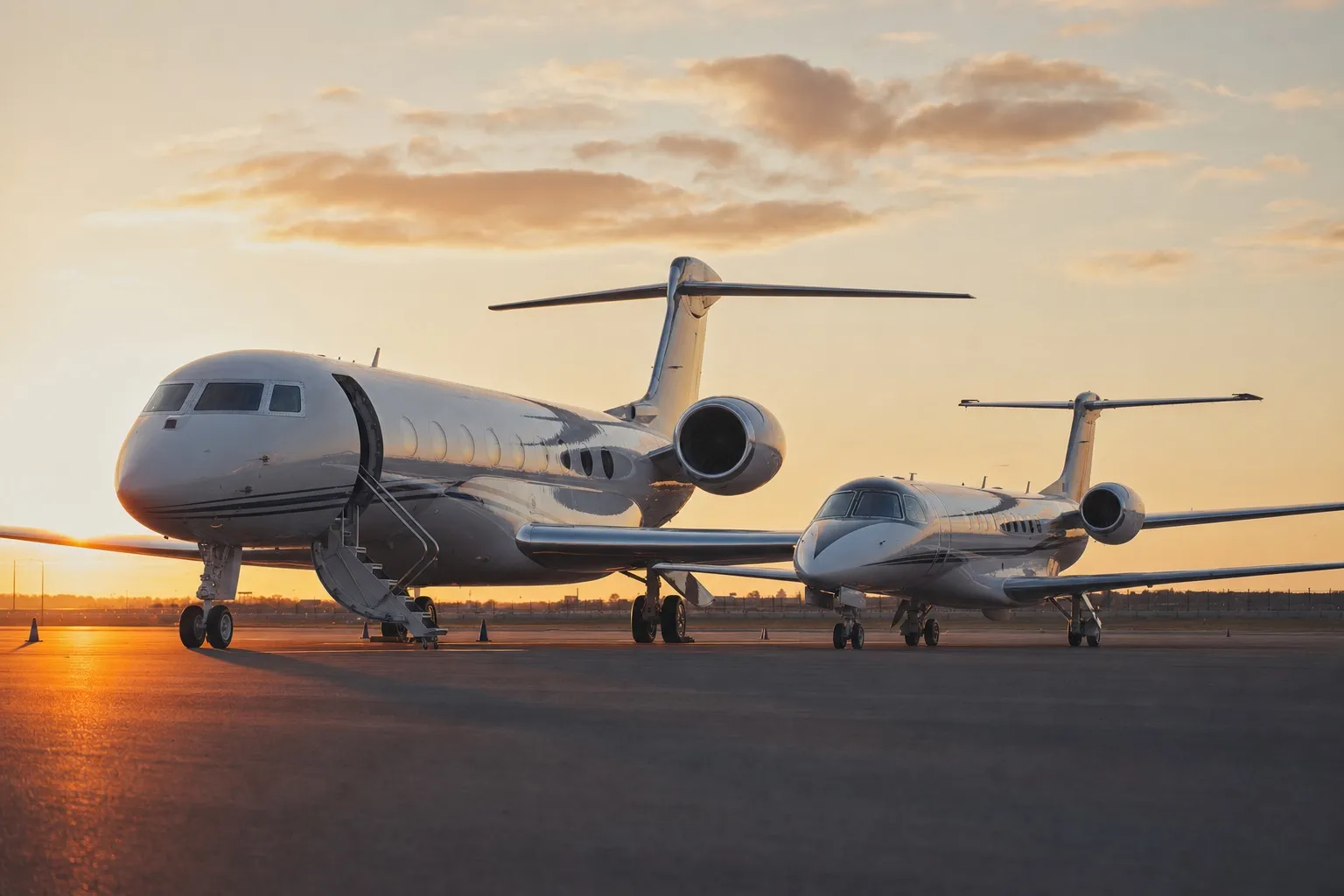
There’s a moment in many quoting conversations where the client has seen two numbers — say £34,000 for a Challenger 350 and £58,000 for a Gulfstream G450 on the same trip — and asks the entirely reasonable question: what is the extra £24,000 actually for?
It’s a better question than it sounds, because the honest answer changes completely depending on the trip. On some routes the heavy jet is an indulgence with wings. On others it’s the only sensible choice and the midsize quote shouldn’t have been sent. Here’s how to tell them apart.
What “heavy” actually buys
Strip away the mystique and the step up from midsize/super-midsize to heavy metal buys you five concrete things:
Range. The big one, literally. A super-midsize does London to the Med, Eastern Europe, North Africa — anywhere in the 3,000-nautical-mile bubble — with ease. It does not do London–New York against a winter headwind, or London–Dubai nonstop with a full cabin. A G450, Global 5000 or Falcon 2000EX-and-up does. If your trip is genuinely long-haul, this isn’t a comparison — it’s a requirement.
A cabin you live in rather than sit in. Heavies have stand-up headroom for actual adults, separate seating zones, a proper galley with a crew member working it, and an enclosed lavatory you could describe as a room. On a ninety-minute hop this is wasted. On nine hours it’s the difference between arriving and arriving functional.
Sleep. Berthable seats and divans that make into flat beds, plus cabin altitude low enough that you wake up feeling human. If you land at 7am into a working day, this line alone can justify the invoice.
A cabin attendant. Midsize flights are typically crew-of-two; the pilots load your bags and point at the coffee. Heavies come with dedicated cabin crew, which changes the trip from “very nice minibus with wings” to hospitality.
Ten-plus seats without squeezing. A super-mid seats eight or nine on paper; at eight-plus-luggage it’s cosy. Heavies carry ten to fourteen with room to spread out — relevant maths for group trips.
What it doesn’t buy
Speed, mostly. Cruise speeds across midsize and heavy jets sit within a few percent of each other; on London–Nice the Gulfstream saves you roughly the time it takes to read this paragraph. It also doesn’t buy airport access — quite the reverse. Heavies need more runway and cost more to park, which shuts them out of some of the small, convenient fields that are half the point of flying private. There are Med and Alpine airports where the midsize is not just cheaper but better, because it can actually park there.
And it doesn’t buy a proportionally nicer interior. A late-model Praetor 500 or Challenger 3500 is a beautifully finished aircraft; a tired first-generation heavy can be twenty years of other people’s meetings. Age and refurbishment matter more than category for how the cabin feels. Ask for photos of the actual aircraft, always — the tail number, not the brochure.
The decision, route by route
Under 3 hours (UK, France, Alps, Iberia): midsize, or smaller. Paying heavy-jet money here is buying headroom for a flight you’ll spend sitting down. Exception: parties of ten-plus, where the heavy is simply the size that fits.
3–5 hours (Greece, Turkey, Canaries, Middle East with a stop): the genuine grey zone. A super-midsize does these routes well; a heavy does them comfortably. Deciders: cabin time of day (overnight or early-morning legs favour the bed), party size, and whether this is one leg of a multi-stop week where crew and cabin consistency earn their keep.
5 hours plus, or transatlantic: heavy, and stop agonising. The midsize “bargain” on these routes usually hides a fuel stop, which adds an hour, a second approach, and a meaningful chunk of the price difference back. Nonstop on the right aircraft is not a luxury on long-haul; it’s the product working properly. (Though if it’s one or two of you flying a scheduled route, read our first-class comparison before chartering anything.)
The quiet middle answer
Most clients circling this question land, correctly, on the super-midsize — the Challenger 350, Praetor 500, G280 tier. Flat-out the sweet spot of European charter: near-heavy comfort, midsize operating costs, small-airport access, transcontinental range. The heavy jet earns its money on genuinely long legs, big parties, and nights spent at 41,000 feet. Everywhere else, the £24,000 question has a £0 answer — put it towards the villa.