Flying Private With Your Dog: The Complete (Realistic) Guide
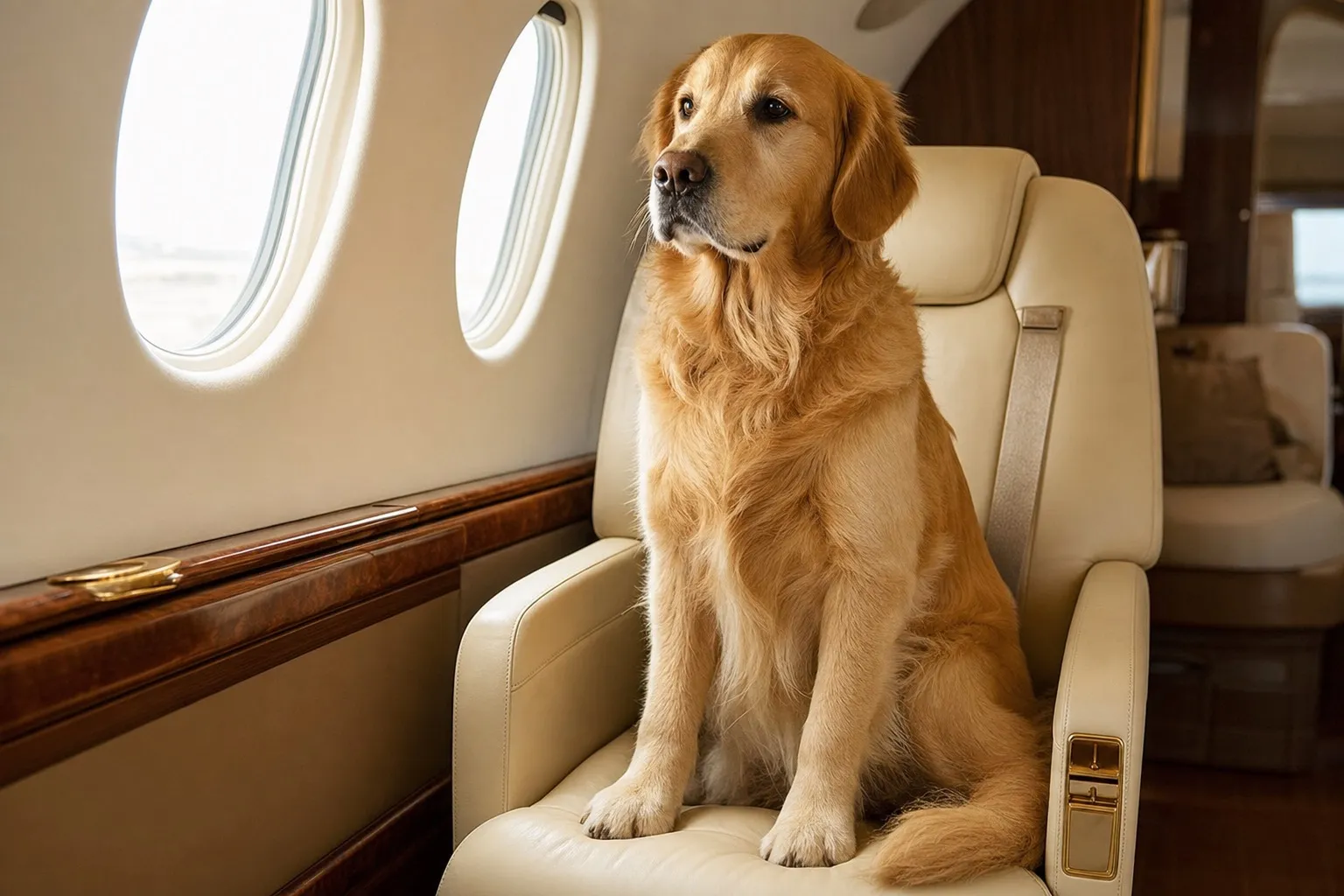
A surprising number of people charter their first jet not for the Champagne or the time savings, but because commercial aviation treats their dog as freight. If you’ve ever priced up flying a large dog to the south of France on an airline — cargo booking, IATA crate, separate check-in, the works — the private option starts looking less like extravagance and more like the only humane plan.
Here’s how it actually works, based on a lot of flights with a lot of dogs (and the occasional cat, and one memorably vocal parrot).
The basic deal: cabin, no crate
On a private charter, your dog travels in the cabin with you. On the seat, on the floor, on your lap — whatever works. No crate required by most operators, though a familiar travel bed or blanket is a genuinely good idea because leather club seats are slippery and dogs find that undignified.
Most operators welcome pets. A minority of owners don’t allow animals on their aircraft at all, and some charge a cleaning fee (typically £150–£500). None of this is a problem if the broker knows about the dog upfront — it only becomes a problem when a labrador appears unannounced at the steps. Mention the dog in your first email. Weight and breed too, since “dog” covers chihuahua to wolfhound.
The paperwork (this is the important bit)
The flight is the easy part. Crossing borders is where preparation matters, and post-Brexit the UK–EU rules deserve five minutes of your attention.
Going from the UK to the EU, your dog needs:
- A microchip (fitted before or at the same time as the rabies jab)
- A rabies vaccination at least 21 days before travel
- An Animal Health Certificate (AHC) issued by an official vet within 10 days of departure — this replaced the old EU pet passport for UK-based pets, and each certificate covers one trip out plus four months of onward/return travel
- For most EU destinations, tapeworm treatment is only needed for the return into the UK — administered by a vet 1 to 5 days before you re-enter
The AHC is the one that catches people out. It’s a vet appointment, it costs roughly £100–£250 depending on the practice, and the 10-day validity window means you can’t sort it a month early. Book the vet when you book the jet.
Coming back into the UK, there’s one more wrinkle: pets must enter through an approved route with a carrier that’s authorised for animal checks. Many private operators are set up for this, but not all airports and not all operators — this is exactly the sort of thing your broker should confirm at booking, and worth asking about explicitly.
What it’s like on board
Dogs, on the whole, are better flyers than people. Cabin pressure changes affect their ears the same way as yours — some water or a chew during descent helps. A few practical notes from experience:
- Walk the dog properly before departure. FBOs have grass, crews are relaxed, and a tired dog is a sleeping dog at FL400.
- Skip the big pre-flight meal. Light breakfast, fly, dinner on arrival. You’re both happier this way.
- Sedation is generally discouraged by vets for flying. Most dogs settle within ten minutes of takeoff anyway. Ask your vet, not the internet (yes, we see the irony).
- Water bowl on the floor, not the table. This lesson has been learned on your behalf, at altitude, more than once.
Short hops suit dogs brilliantly. Two hours London to Cannes door-to-door beats a day of cargo terminals in every way that matters to an animal.
What it costs
The dog itself usually adds little or nothing: perhaps a cleaning fee, occasionally a small pet surcharge. The real cost is that you’re chartering an aircraft — so the practical move is to make the maths work the way other pet owners do:
- Share the flight. Dog owners flying to the same second-home hotspots often split charters. Two families, two dogs, one light jet to Malaga is a popular formula.
- Watch for empty legs. Pets are usually fine on empty leg flights, same rules apply. Our empty legs guide explains how to catch one.
- Go turboprop for short routes. A King Air 350 has a big, dog-friendly flat floor and costs a lot less per hour than a jet.
The one-paragraph version
Tell the broker about the dog when you enquire. Book the vet’s Animal Health Certificate appointment inside the 10-day window. Confirm your return route is approved for pet checks. Bring a blanket and skip breakfast. That’s genuinely the whole thing — the rest is your dog asleep on a leather seat somewhere over the Channel, wondering why you ever did it any other way.