Your First Private Jet Flight: What Nobody Tells You
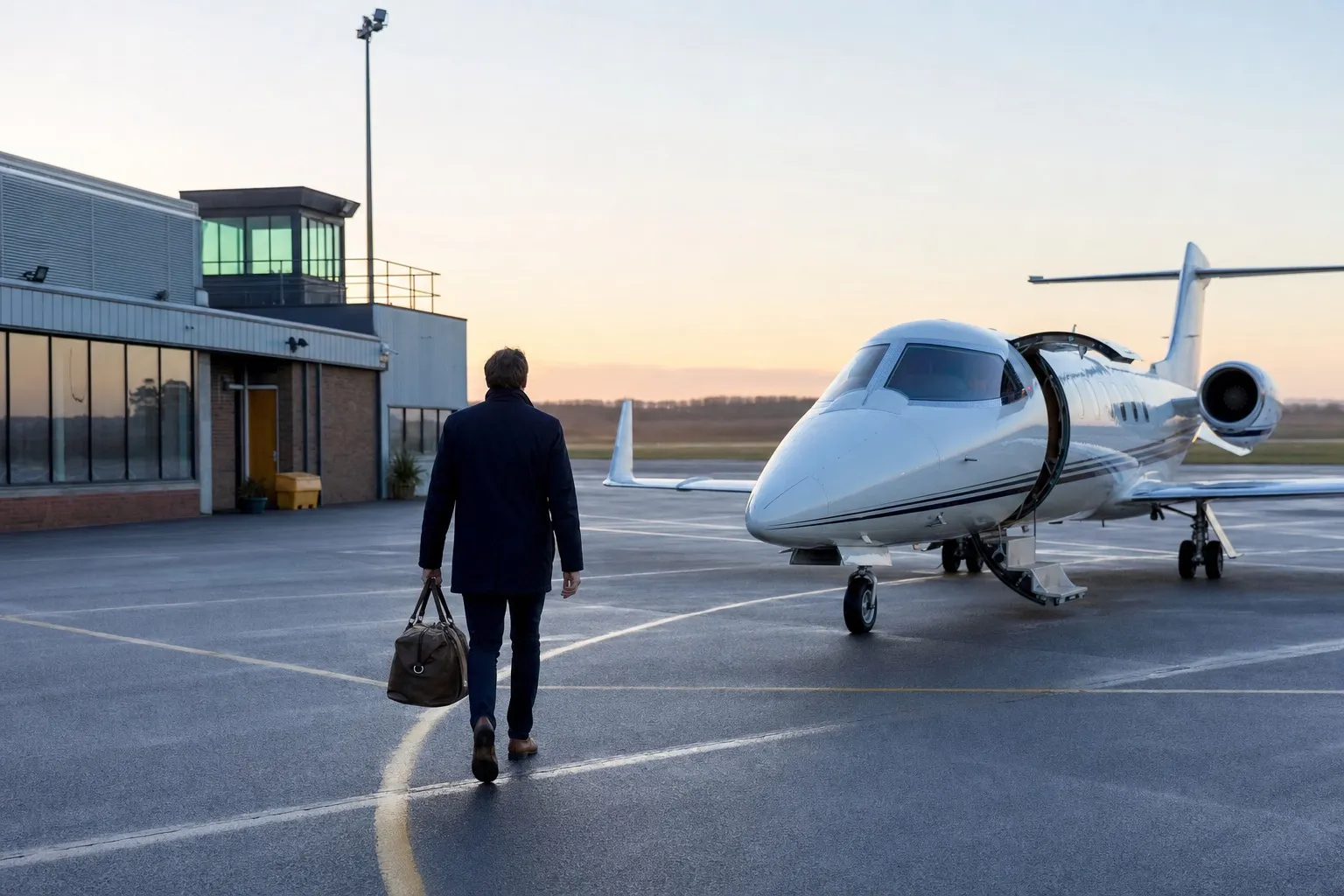
The first time I flew private, I arrived at Biggin Hill ninety minutes early, because that’s what airports had trained me to do. I then sat alone in a very nice lounge drinking coffee while the receptionist politely didn’t mention that the aircraft wasn’t even due for an hour. Learn from my mistake.
Here’s everything I wish someone had told me before that first flight.
Arriving: 15 minutes is plenty
At most FBOs (the private terminals — it stands for Fixed Base Operator, a term nobody will ever ask you to know), the process is: drive up, someone takes your bags, you show a passport, and you walk or get driven to the aircraft. The whole thing takes about ten minutes.
Aim to arrive 15–20 minutes before departure. Some passengers cut it closer; crews generally hold the flight for you within reason because you are, quite literally, the schedule.
If you’re flying internationally, customs usually comes to you — an officer glances at passports either in the lounge or at the aircraft steps. At smaller fields it might just be your crew checking documents. Either way, there is no queue. There is never a queue. This is roughly 60% of what you’re paying for.
Luggage: soft bags win
There’s a hold, but it’s shaped like an aircraft, not a warehouse. On a light jet, think “boot of a large estate car.” The practical advice:
- Soft duffels and squashable bags fit far better than rigid suitcases
- Golf clubs and skis fit on most light jets and everything above — but tell the broker in advance so they pick an aircraft with the right hold
- On very light jets like the Phenom 100, pack like you’re going for a weekend even if you’re going for a fortnight, or size up the aircraft
Nobody weighs your bag with the gimlet eye of a low-cost carrier, but total weight does matter on smaller aircraft, especially with full seats and full fuel. Be roughly honest with the broker about how much you’re bringing.
On board: it’s smaller and better than you expect
If your mental image is a flying nightclub, recalibrate. A light jet cabin is an extremely nice corridor. You’ll likely stoop to walk to your seat, and the lavatory on smaller jets is best described as “technically present.” (On midsize jets and up, both problems disappear — cabins go flat-floor and stand-up height around the Legacy 650 class.)
What it lacks in volume it makes up for in everything else. The seats are enormous, the windows are at eye level, and the aircraft leaves when you sit down. There’s something quietly absurd about the door closing four minutes after you arrived at the airport.
A few on-board notes:
- Drinks and snacks are stocked as standard. Proper catering is arranged in advance — your broker will ask.
- Wi-Fi exists on most midsize and larger jets, and is patchy-to-absent on light jets. Download things.
- The seatbelt sign is more of a suggestion delivered verbally by a pilot whose name you know. It’s very civilised.
The etiquette questions everyone secretly has
Do I tip the crew? Not expected, never required. Some passengers tip on exceptional service or long multi-leg trips — £50–£100 to the crew is generous and will be remembered. Genuinely nobody is judging either way.
Can I sit in the co-pilot seat? On a two-crew jet, no. On some single-pilot turboprops like the PC-12, sometimes yes, if you ask nicely and the operator allows it. Best question to ask at booking, not at the steps.
Can I bring my dog? Usually yes, in the cabin, no crate required — one of the single biggest quality-of-life differences from commercial. Mention it when booking because a small pet fee or cleaning charge sometimes applies, and a handful of owners don’t allow animals on their aircraft.
What do I wear? Whatever you like. Genuinely. The crew will be smarter than you and that’s fine.
Delays still exist (sorry)
Private jets skip the terminal, not the weather. Fog, de-icing queues, and French air traffic control strikes apply to everyone. The difference is flexibility: your crew can often leave early to beat weather, or an hour late because you’re stuck in traffic, and slots at private fields are far easier to change.
The one thing to actually remember
Bring your passport. Even for domestic flights, photo ID. It is the single most common thing forgotten by first-time private flyers, presumably because everything else is so easy that the brain files the whole day under “no admin required.”
Everything else — bags, catering, cars to the aircraft, that sort of thing — someone else is paid to remember for you. Enjoy it.